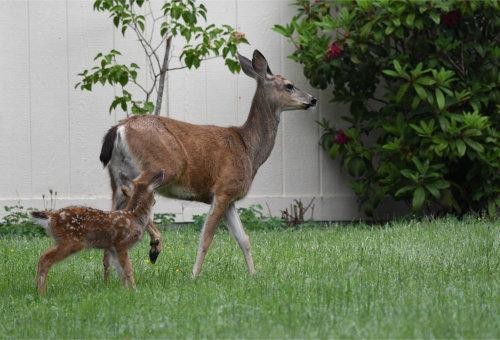
Deer: Quiet Beauty in Everyday Life
Deer are one of those animals we tend to take for granted until we see them up close. Then suddenly, everything about them feels a little more fascinating. Whether it’s a quiet sighting along a country road or a glimpse at the edge of a backyard, deer have a way of bringing a sense of calm and curiosity at the same time.
Of course, I know they’re not always welcome visitors. If you’ve ever put time and effort into a garden, only to find it nibbled down overnight, you already know that deer can be a bit… frustrating. They seem to have a knack for finding the exact plants you were most excited about. They can also be troublesome for drivers on the roads.
Still, even with that reality, there’s something about them that’s hard not to appreciate. Let’s start with the babies...fawns. Fawns are born with white spots that act as natural camouflage, helping them blend into dappled sunlight on the forest floor. For their first few weeks of life, they spend most of their time lying still and hidden while their mother forages
nearby. They don’t have a strong scent yet, which helps keep predators from detecting them. It’s nature’s way of giving them a quiet, protected start.
Adult deer, especially white-tailed deer (the kind most commonly seen in Wisconsin), are incredibly alert animals. Their large ears can rotate almost independently, picking
up sounds from multiple directions at once. Their eyes are positioned on the sides of their heads, giving them a wide field of vision...perfect for spotting movement. They rely more on motion detection than sharp detail, which is why standing still often makes you less noticeable to them than moving around.
One of the
most interesting features of male deer (bucks) is their antlers. Unlike horns, antlers are shed and regrown every year. During the growing season, they are covered in a soft, fuzzy layer called velvet, which supplies nutrients and blood flow. Once fully grown, the velvet is shed, revealing the hard bone underneath. It’s a cycle that repeats year after year.
Deer are also creatures of habit. They tend to follow the same paths, known as game trails, as they move between feeding and bedding areas. These trails can become quite defined over time, which is why you’ll often see deer crossing roads in the same spots repeatedly. Early morning and dusk are their most active times, which just happens to be when many of us are commuting.
And while they may seem delicate, deer are surprisingly strong and agile. They can run up to 30 miles per hour and leap as high as 8 feet when needed. That graceful movement we notice isn’t just for show...it’s essential for survival.
So yes, they may occasionally treat your garden like an all-you-can-eat buffet and you have to keep a careful eye out for them on the roads, but they’re also a reminder that nature is alive and moving all around us. There’s a quiet beauty there that’s easy to overlook, but once you notice it, it’s hard to forget.
Enjoying my newsletter? Please REPLY and let me know! Also, please forward this newsletter to 5 of your family members and/or
friends and share the love!
Here's what just one GON reader had to say...
"I loved your May 3 issue. Mornings can feel rushed, and I don’t always have the time or energy to do a full routine, so this spoke to me.
I started keeping a few go-to
items in one spot like you suggested, and it’s already made getting ready feel easier. Even something as simple as focusing on a quick hair refresh and a little lip color helped me feel more put together without adding extra time to my morning.
I also appreciated that the tips felt realistic and
doable...not overwhelming or expensive. It reminded me that small touches can make a big difference in how you feel heading into your day.
This is one of those issues I’ll go back to again."
-- Ava, Saratoga Springs, NY