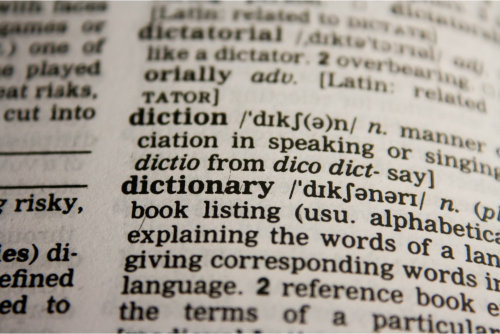
Words have power. They don't just communicate our thoughts. They shape them. The words we
repeat to ourselves often become beliefs, and those beliefs influence our actions.
When it comes to organizing, there are certain words that quietly sabotage our progress. We say them so often that we barely notice them anymore. Yet each one can become a roadblock that keeps clutter in place and prevents us from moving
forward.
The good news? Once you recognize these words, you can begin replacing them with more helpful ones. Here are some of the biggest offenders.
1.
Miscellaneous
This innocent-looking word has probably caused more clutter than almost any other. Think about it. How many drawers, bins, boxes, or computer folders are labeled "Miscellaneous"? It's really just another way of saying, "I don't know where this belongs."
The problem is that miscellaneous isn't a category. It's the
absence of one.
Instead of creating a miscellaneous drawer, ask yourself what the items actually have in common. Are they office supplies? Batteries? Gift cards? Small tools? Sewing supplies? If an item truly doesn't belong with anything else, perhaps it's time to question whether you need to keep it at all.
Giving things a real home makes them much easier to find...and much more likely to be put away.
2. Should
"I should organize the garage."
"I should clean out that closet."
"I should finally
go through those boxes."
The word should often carries guilt. Instead of motivating us, it reminds us of everything we haven't done yet.
Try replacing should with could or
will.
"I could spend 15 minutes in the garage today."
"I will sort one shelf this weekend."
Suddenly the task feels less like an obligation and more like a choice.
3. Always
"I always make a mess."
"I'm always behind."
"My house is always cluttered."
Words like always exaggerate reality. Chances are your home isn't cluttered every minute of every day. There are probably rooms you've organized well and projects you've completed successfully.
Replacing always with something more accurate
creates a healthier perspective.
"I'm struggling with this room right now."
"I've fallen behind lately."
Those statements leave room for improvement instead of making clutter feel like a permanent part of your identity.
4. Never
"I'll never get organized."
"I never finish what I start."
"I never have enough
time."
Just like always, the word never closes the door before you've even begun. If you've ever finished even one organizing project, then "never" isn't true.
Try saying:
"I haven't figured out the best system yet."
"I'm still learning what works for me."
Those words
encourage growth instead of defeat.
5. Someday
"Someday I'll organize the attic."
"Someday I'll scan all those photos."
"Someday I'll clean out the basement."
Unfortunately, someday rarely appears on the calendar.
Give your goal a real date...even if it's months away. Once a task has a scheduled time, it becomes much more likely to happen.
6. Just in Case
This phrase has probably earned a permanent place in the clutter hall of fame.
We keep clothes "just in case."
We save cords "just in case."
We hold onto manuals, containers, duplicate kitchen gadgets, old craft supplies, and stacks of paper "just in case."
Sometimes keeping something for a genuine future need makes sense. But often we're preparing for situations that are extremely unlikely to happen.
When you hear yourself saying "just in case," ask yourself another question:
"What are the chances I'll actually need this?"
The answer is often surprisingly small.
7. Perfect
Many organizing projects never begin because we're waiting to do them perfectly. We want the perfect storage containers. The perfect labeling system.
The perfect weekend. The perfect amount of time.
Meanwhile, nothing gets done.
Remember that an imperfectly organized drawer is still better than a completely disorganized one. Progress almost always beats perfection.
8. Enough
This word can work both for and against us.
"I don't have enough time."
"I don't have enough storage."
"I don't have enough energy."
Sometimes those statements are true. But often they're
assumptions.
Maybe you don't have enough time to organize the entire basement, but you probably have enough time to sort one box. Shifting your focus from what you don't have to what you do have helps build momentum.
9. Later
"I'll deal with it later."
"I'll put it away later."
"I'll sort it later."
Unfortunately, "later" has a way of turning into days, weeks, months...or even years.
Whenever possible, follow the "one-touch rule." If it takes less than a minute or two, do it now instead of creating another future task.
10. Can't
"I can't get organized."
"I can't let things go."
"I can't change."
These may feel true, but they often aren't. Ask:
"What would help me do this?"
That simple shift turns a dead end into a problem-solving opportunity.
Choose Words That Move You Forward
Pay attention to the words you use over the next week. You may be
surprised how often they influence your decisions without you even realizing it.
Replace miscellaneous with a real category.
Replace should with
will.
Replace always and never with words that reflect reality.
Replace someday with a date.
Replace can't with how.
Changing your vocabulary won't organize your home overnight. But it can change the way you think about clutter...and sometimes that's exactly where lasting organization begins.
P.S. On another note...Practical Essentials for Every HomeYou're sure to love my
collection of reliable, everyday items that help keep your home comfortable, organized, and running smoothly. From bedding and towels to kitchen tools and household basics, these are practical products you'll reach for again and again. Visit:Practical Essentials for Every Home