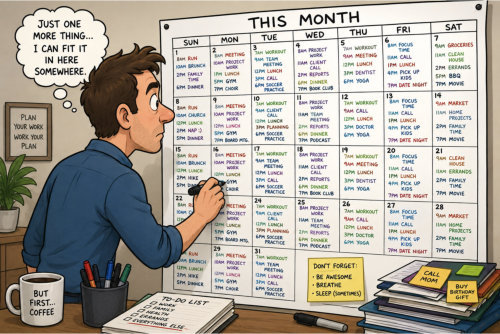
We live in a culture that celebrates being busy. Full calendars, endless TO DO lists, and
days packed from morning until night are often worn like badges of honor. It's easy to believe that the more we accomplish, the more successful, productive, or fulfilled we'll be.
But trying to squeeze every possible task, appointment, errand, and obligation into a
single day is rarely a recipe for success. More often, it's a recipe for stress, exhaustion, and disappointment.
Sometimes, you're the one doing the overscheduling. Other times, it isn't even your schedule you're trying to keep up with. It may be a spouse who wants to fit "just one more thing" into the day, a son or daughter who has
every hour spoken for, or a family calendar so packed that everyone ends the day worn out.
Whether you're creating the schedule or simply trying to survive it, the results are often the same: too much to do and not enough time to enjoy any of
it.
The problem begins with unrealistic expectations. Every day contains only 24 hours, and no amount of planning can create more time. When we cram our schedules to the limit, we leave no room for the unexpected.
Traffic takes longer than expected. A meeting runs over. A child needs help with homework. A friend calls. The dog gets sick. Life has a way of interrupting even the best-laid plans. If every minute has already been assigned, one small delay can throw the entire day off course.
Overloaded schedules also rob us of the ability to enjoy what we're doing. When we're constantly watching the clock, we're never fully present. We rush through conversations, meals, hobbies, and even family time because we're already thinking about what's next. Instead of experiencing the moment, we're racing to reach the next item on the list.
Ironically, trying to do more often leads to accomplishing less. Mental fatigue makes it harder to concentrate, solve problems, and make good decisions. By late afternoon, many people find themselves rereading the same email several times, forgetting important details, or making careless mistakes that require even more time to fix later. Productivity isn't just about how many hours we spend working. It's also about the
quality of our focus.
An overstuffed day also increases stress. Constantly feeling behind creates a sense of urgency that keeps our minds in overdrive. We begin to feel as though we're failing, even when we've accomplished more than most people would consider a successful day. The TO DO list becomes something that controls us instead
of something that helps us.
There's another hidden cost to overscheduling: it leaves no room for rest. Breaks aren't wasted time. They're necessary. Our brains need moments to recharge, reflect, and reset. Even a short walk, a few quiet minutes with a cup of coffee, or simply sitting without a screen can restore energy and improve
focus. Without those pauses, we slowly wear ourselves down until even simple tasks feel overwhelming.
One of the greatest benefits of being organized is that it creates room for spontaneity. That may sound like a contradiction, but it's true. When your responsibilities are under control and your schedule isn't packed to the brim, you
can say "yes" to unexpected opportunities.
A friend invites you to lunch. You decide to take a scenic drive. Your granddaughter wants to bake cookies. You linger on the porch to watch a summer sunset. That's not poor planning. It's planned spontaneity. By
intentionally leaving some margin in your day, you give yourself the freedom to enjoy life's unplanned moments instead of feeling frustrated that they're disrupting your schedule.
A better approach is to plan for less than you think you can accomplish. It may seem counterintuitive, but building margin into your day actually increases
productivity. When you finish your planned tasks early, you can move on to something extra. If unexpected events arise, you have the flexibility to handle them without feeling like your entire schedule has collapsed.
It also helps to identify the few things that truly matter each day. Instead of creating a list with twenty tasks,
choose the three or four that will make the biggest difference. Complete those first, then consider anything else a bonus. This simple shift reduces pressure while ensuring that the most important work gets done.
If you're the one who tends to overschedule, consider giving yourself permission to leave something undone. If someone else
is filling your calendar to overflowing, it may be time for an honest conversation about what is realistic. A little breathing room isn't laziness. It is one of the best gifts you can give yourself and those around you.
At the end of the day, our lives aren't measured by how many boxes we checked. They're measured by the quality of our
work, our relationships, our health, and the peace we experience along the way. A day with a little margin isn't an unproductive day. It's a balanced one.
You don't have to earn your rest by exhausting yourself first. Leave a little empty space on your calendar. It isn't wasted time. It's the space where life has room to
happen.
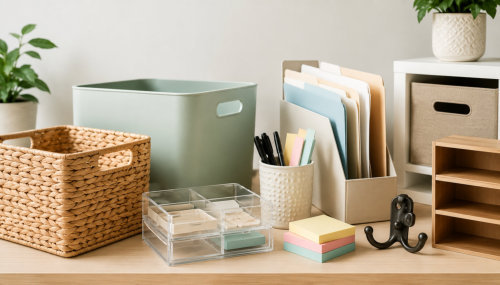
P.S. Essentials for a Clean, Organized CarWhether you're
commuting, road tripping, or just running errands, a clean and organized car makes everything feel smoother. These products help you keep clutter in check, trash off the floor, and essentials easy to grab! Access Here