One of the sneakiest things about clutter is that our minds are incredibly good at coming up
with reasons to keep it. In fact, if we think hard enough, we can usually create some sort of hypothetical situation that seems to justify hanging onto almost anything.
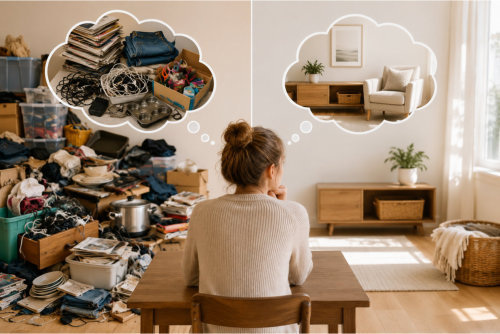
That stack of magazines might contain an article we’ll want to reread someday. The tangled cords in the drawer may eventually match a device we still own. The jeans
that haven’t fit in years could become useful if we lose weight. The craft supplies from a hobby we barely started may come in handy if we suddenly rediscover our interest in it.
Even extra serving dishes and duplicate kitchen gadgets can seem reasonable to keep
because "what if" we host a larger gathering one day.
The truth is, many of these situations could happen. That’s what makes clutter so tricky in the first place.
You really might need that extension cord someday. You could take up scrapbooking again. You
may decide to host Thanksgiving dinner for a crowd.
Our minds naturally focus on possibility, and sometimes those possibilities feel responsible or practical enough to justify keeping things around indefinitely.
The problem is that if we keep every item based on a possible future scenario, our homes slowly begin filling with objects tied more to imaginary situations than to our actual daily lives.
At some point, it becomes important to ask a different question instead:
Is this item serving my life right now?
That question changes everything.
Clutter has a way of quietly affecting us in ways we don’t always notice at first. It takes up valuable space, creates visual distraction, makes cleaning more difficult, and often adds stress when we’re trying to find what we
really need.
Even when we become accustomed to it, excess clutter still competes for our attention and drains mental energy in the background.
Many people also hold onto items because letting go feels emotionally uncomfortable. Sometimes the object represents money that was spent, a version of ourselves we hoped to become, or a future we still imagine might happen someday. In other cases, people worry that getting rid of something will somehow leave them unprepared.
Of course, there’s nothing wrong with being practical or prepared. Most organized people still keep backups, emergency supplies, and useful extras. The goal isn’t to eliminate every "just in case" item from your home. The goal is to find a healthy balance between being prepared and being overwhelmed by possessions that rarely serve a real purpose.
For example, maybe keeping one versatile serving tray makes sense, while storing seven oversized platters "just in case" does not. Perhaps saving a small collection of meaningful craft supplies feels reasonable, but multiple bins of unfinished projects only create guilt and clutter. Sometimes reducing the quantity (not eliminating everything entirely) is what
creates peace.
When you feel unsure about an item, it can help to gently challenge your own reasoning by asking practical questions. When was the last time you actually used it? If you suddenly needed it, would you even remember that you owned it? Could you borrow, replace, or improvise if that unlikely situation ever arose? Perhaps
most importantly, are you keeping it because it truly adds value to your current life, or simply because letting go feels difficult? Those questions often bring surprising clarity.
Removing unnecessary items from a space can feel incredibly therapeutic. A cleaner, calmer environment often helps people breathe easier, think more
clearly, and feel more at peace in their own homes. As clutter disappears, the things that truly matter become easier to see, easier to use, and easier to appreciate.
You do not have to prepare your home for every possible version of the future. Instead, you can create a home that supports the life you are living right now, while still
leaving room for comfort, flexibility, and peace of mind.
P.S. Father's Day Gifts for the Win!
Celebrate dad in style! Whether he’s into grilling, gadgets, golf, or good old relaxation, this list is packed with winning Father’s Day gift ideas he’ll actually love and use. Thoughtful, fun, and totally dad-approved!