Most people like the idea of menu planning. It sounds responsible. Organized. Like
something the future version of themselves will surely do.
And yet…they don’t.
It’s not because people don’t care about saving money, eating better, or avoiding that 4:45 p.m. "What’s for dinner?" panic. It’s because menu planning feels bigger than it
needs to be.
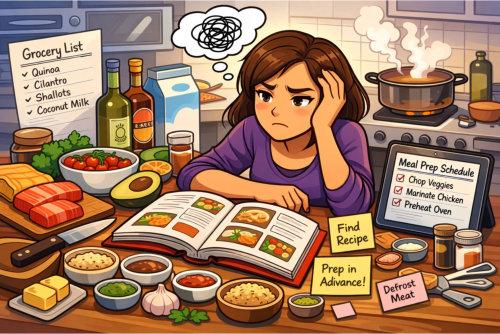
Somewhere along the way, it got turned into a complicated, color-coded, spreadsheet-worthy production involving recipes, grocery lists, prep schedules, and a level of decision-making most of us simply don’t have the energy for at the end of a
long day.
So we put it off. We tell ourselves we’ll do it when we have time. And just like hobbies, organizing projects, or exercise, "when I have time" usually means never.
Here’s the truth: menu planning doesn’t fail because people are lazy. It fails because they’re trying to do too much. They think they need:
Seven brand-new dinners
Exact recipes
A perfect grocery list
A full week mapped out
That’s overwhelming before you even begin.
Instead, menu planning becomes easy, almost automatic, when you make it less about "planning meals" and more about "planning
options."
Start by thinking in categories, not recipes.
You don’t need seven meals. You need 4–5 dependable dinner types you can rotate. For
example:
Pasta night
Soup or slow cooker night
Simple protein and vegetable
Sandwiches or wraps
Leftovers or “use what we have” night
Now instead of asking, What are we eating? you ask, What fits tonight’s category?
Pasta night might be spaghetti, ravioli, or even mac and cheese.
Soup night could be something homemade, canned, or freezer-friendly.
Protein night might be grilled chicken, baked fish, or even eggs.
No pressure. No perfection.
Another way to simplify? Stop planning for seven nights. Plan for four.
Life
happens. Plans change. Leftovers appear. Someone suggests going out. When you plan fewer meals, you create breathing room instead of guilt.
Finally, use what you already have as your starting point. Look in your freezer or pantry first and build meals around those items. This keeps menu planning grounded in reality instead of turning
it into another task on your TO DO list.
Menu planning doesn’t have to be a weekly production. At its simplest, it’s just deciding ahead of time what kind of dinner you’ll have and giving your future self one less decision to make at 5 p.m.
That’s where the magic happens. Not in the planning.
But in the peace.
P.S. Seasonal Swap Systems: Transition Your Home from Winter to Spring with Ease
Make the transition from winter to spring smooth and stress-free with my newly curated list of seasonal essentials. These smart, practical storage
solutions make it easy to rotate clothing, protect off-season items, and keep everything neatly organized until you need it again. Put a simple system in place now, and you’ll avoid the scramble next season. Visit: